Monday, November 21, 2011

Yoga Intemediate Exercises.

Today I want to share some Yoga Intermediate exercises that you can perform at your home. Which will help you to manage your everyday stress and make you relax. Hope you enjoy it, it will only take 15 to 20 second of  your time.

Mountain Pose
Technique: Stand up straight with your legs together or hip wide apart. Straigten your shoulders. Extend your spine, the entire body up (by lifting your head up). Realize your balance point, when your body is steady, and relax maintaining your stability.


Revolved Side Angle Pose with Rotation To Left Leg
Technique : Put your feet at the length of your leg. Stretch arms to your sides. Rotate your left foot 90 degrees and your right foot about 15 degrees to the left. Rotate your pelvis and torso as much to the left as you can. Bend your left knee trying to reach 90 degrees. Keep your right leg straight and firm with the heel on the floor. Rotate your torso more to the left and try to move your right shoulder behind your left knee and put your right hand on the floor behind your left foot. Raise your left arm. try to look up at your hand.
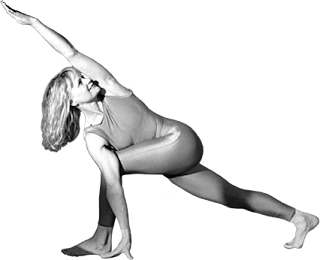


Revolved Side Angle Pose with Rotation To Right Leg
Technique : Put your feet at the length of your leg. Stretch arms to your sides. Rotate your right foot 90 degrees and your left foot about 15 degrees to the right. Rotate your pelvis and torso as much to the left as you can. Bend your right knee trying to reach 90 degrees. Keep your left leg straight and firm with the heel on the floor. Rotate your torso more to the right and try to move your left shoulder behind your right knee and put your left hand on the floor behind your right foot. Raise your right arm. try to look up at your hand.


Wide-Legged Forward Bend
Technique:  Stand up straight. Put your feet wide apart, at the length of your leg. Press your palms against your back and bend forward arching a little. Put your palms on the floor and arch. try to tighten the back of your legs. Extend your pelvic bones up. Look straight.


You can do it as circuate, rep. 3 times.

Sunday, November 13, 2011

To Whom It May Concern

Today I want to share my learning experience. I am kind of student who can't learn only by reading the book. I need to hear my teacher voice and see his expression (I'll explain more).

I am student in Medix School, under PTS (Personal Training Specialist) program, my teacher is Mr. Roburt Tranter. He is teacher who has his own style of learning, first he wants us to have fun learning because everything you are having fun will stick in your memory, second he always try to tell us interesting knowledge that is related to the lesson, third he always make sure we got the lesson, either by showing video or by doing acts of his own.

That is why I never love to miss his class so that not a bit f knowledge be missed.

Tuesday, October 18, 2011

Be Successful by Learning from Others best

After 6 months school and training and months to come till graduation, each day we are experiencing new stuff. But the best part is to learn without surrounding ourselves with egos.

Today I want to share my new learning experience by learning from my classmate best.
Our teacher gave us "Exercise Demo checklist" homework to do with partners. So my partner and I took a spot and started our "Exercise Demo Checklist" one of the points was to provide "Imagery Cues". To be honest I am more realistic and I don't feel good in imagining thing but I tried my best, as for my partner really impressed me how she made me imagine the work out to be done and not only made it smooth but i felt I had fun, which is the most important thing we have to do with our client so that they don't get bored.

I know I made you anxious what she said. The exercise she chose was Bicep Curl (the muscle on your front arm).
How to perform: you have to flex your arm, by raising your forearm to your arm. 
The "Imagery Cues" that she gave me was: " Imagine you are holding your lovely daughter and bringing her up and giving her sweet kiss and putting her back on the floor".

Isn 't the most sweet thing ever to be said and believe me every repetition I was performing I was imagining what she asked me to image and felt happiness deep inside me.  Thank you my friend and my classmate for teaching me new style of describing exercises.  When we become humble and open for new things to learn, for sure we will be very SUCCESSFUL!!

Thursday, September 22, 2011

How Fitness Help to Cop our Grief and Lost

When grieving, you may feel as if you are helpless. But you can take charge of your
health and participate in regular exercise, which may help you cope during the grieving process.
Remember that grief is a normal emotion, and you will heal over time.
Grief causes tremendous stress on the body. Unresolved grief can trigger depression, anxiety, substance abuse and health problems, according to HelpGuide.org. Grief may weaken your immune system and cause you to feel fatigued often. Taking care of yourself while grieving becomes especially important.
Exercise helps take your mind off your concerns. Physical activity releases endorphins, natural chemicals in your body that can help enhance your mood, decrease stress hormones and improve sleeping patterns. Aim for 30 minutes or more of exercise a day, for three to five days a week. Try to get enough sleep and eat properly as well.
Walking is one of the easiest, most convenient ways to incorporate physical activity into your daily routine. Walk outside and observe nature. Walk in the sunlight to stimulate the production of Vitamin D and increase serotonin levels in the brain. Ask a friend to join you, because you will benefit from social support at this time. Stretch before and after walking to prevent muscle cramps. Even short walks can help you feel better.
Practice deep breathing. Imagine yourself breathing in love, and breathing out sorrow. Focus on your abdomen, noticing it rise and fall. Allow yourself to experience emotion and soften your belly, rather than tensing it. Attempts to numb pain can cause tension in your body. Practice this exercise for 15 minutes a day if you can.
Performing any activity that gets your heart pumping can help improve your mental health. Like traditional physical activity then try running, jogging, swimming or cycling.
Next time I will write more about holistic living ways to cop our grief and lost…..


IN THE MEMORY OF ARINE TCHERCHIAN

Thursday, September 8, 2011

J.T. Challenging and Motivating Story

J.T is 38 years old male, married, have 3 hyperactive kids and attending school. So you can imagine how stressful is his life. But with all his hectic life he was very committed client and willing to do any routine.
Because he wanted to increase his cardio, loose body fat and increase muscle strength and endurance, each time I gave him different routine (Monday work on upper body muscles, Wednesday work on lower body muscles and Friday work whole body muscles mostly Plyometric which helps preventing injuries).
When we started our training his weight was 183lb and his BMI 29, now after three month training he weights 173.4lb and his BMI is 27.2, which makes me say proudly “ I am very proud of you my client because together we reached to one of your goals and that is to lose 10lb in 3 month”
As for body measurement one of most important body part that we all have to be careful is our waist measurement which can lead us to lots of diseases . My client waist measurement at the beginning was 38 inc, now his waist is 36.8.
With weights exercises he made double progress, example: bicep pull down he use to do 40lb now he can do 80lb. Bird dog exercise he used to hold for 60sec now he can hold for 180sec. This can make me check on the second and third goal to be flexible and balanced. All this encourage him to keep consistent.
In this journey we both learned from each other. J.T. used to be closed not showing or talking about his feelings but now I feel he is so comfortable and I enjoy that. As for me I learned from my client as much as possible not to be over reacting and try to take it easy.
Thank you my dear client, I really enjoyed every single moment with you as your trainer and now I can say: WE DID IT!!

Saturday, August 13, 2011

Resistance Training can help smokers kick the habit

Today proudly I can say researches one more time proved that exercise (Resistance Training) is so benefitial for us not only to lose weight, stress, diffrent kind of disease but also good news it helps smokers to kick their smoking habit.
I found this article from ScienceDaily and I want to share it with you as it is:
"
Although exercise has been shown to reduce many of the negative experiences that accompany quitting, such as cigarette cravings, withdrawal symptoms and weight gain, the majority of these studies have focused only on women and only on aerobic exercise. The Miriam study, published online by the journal Nicotine & Tobacco Research, is the first to examine resistance training as an aid for smoking cessation.
According to the findings, male and female smokers who completed a 12-week resistance training regimen as part of a standard smoking cessation treatment program were twice as likely to successfully quit compared to those who did not regularly lift weights.
"Cigarette smoking kills more than a thousand Americans every day, and while the large majority of smokers want to quit, less than five percent are able to do it without help," said lead author Joseph Ciccolo, Ph.D., an exercise psychologist, researcher and physiologist with The Miriam Hospital's Centers for Behavioral and Preventive Medicine. "We need any new tools that can help smokers successfully quit and it appears resistance training could potentially be an effective strategy."
In their pilot study, Ciccolo and colleagues enrolled 25 male and female smokers between the ages of 18 and 65 who reported smoking at least five cigarettes a day for the past year or more. All participants received a 15-20 minute smoking cessation counseling session as well as an 8-week supply of the nicotine patch before being randomized into two groups.
The resistance training group engaged in two, 60-minute training sessions per week for 12 weeks. The full-body routine involved 10 exercises, with researchers gradually increasing weight and intensity every three weeks. Participants in the control group watched a brief health and wellness video twice a week.
At the end of the 12 weeks, 16 percent of smokers in the resistance training group had not only quit smoking, but they also decreased their body weight and body fat. In comparison, 8 percent of individuals in the control group had quit smoking, yet they increased their body weight and fat.
And the effects appear to be long-lasting: three months after the study was completed, 15 percent of those in the resistance training group had successfully maintained their quit attempt compared to 8 percent of the control group.
Although Ciccolo says the study's results are "promising," he cautions that further research is needed before resistance training can be used as a clinical treatment for smoking cessation.
According to the Centers for Disease Control and Prevention (CDC), more than 46 million American adults were current smokers in 2009 -- or about one out of five people. Smoking costs the United States approximately $193 billion each year in health care expenditures and lost productivity.
The study was funded by a grant from the National Cancer Institute. Co-authors included Shira I. Dunsinger, Ph.D. and Ernestine G. Jennings, Ph.D. of The Miriam Hospital's Centers for Behavioral and Preventive Medicine; David M. Williams, Ph.D. of Brown University; John B. Bartholomew, Ph.D. of the University of Texas at Austin; Michael H. Ussher, Ph.D., of St. George University of London; William J. Kraemer, Ph.D. of the University of Connecticut; and Bess H. Marcus, Ph.D., of the University of California at San Diego"

Wednesday, August 3, 2011

Mental Training

In order for athletes to get the most out of their performance, it is critical for them to understand the value of developing a strong mental game to complement their physical abilities.Sport psychology professionals need to educate the sports community on the value of mental training by highlighting the mental factors to its limit and to enhance athletic performance.
But this does not apply to athletes only, it applies to all of us to know the value of mental training by understanding our limitations and enhancing our performances to reach our goals.
OUR MIND HAS BEEN MADE UP NOT BY THE TRUTH, BUT THROUGH OUR PERCEPTIONS AND THE WAY WE’VE TALKED TO OURSELVES.
Today article will include some mental training specific words like:
1.- Scotoma
2.- Efficacy
3.- Potential
4.- Conditioning
What is Scotoma and how we can use Scotoma to our benefit:
Scotoma means blind spot, it is a good thing if we are reading or concentrating on certain thing , because we block out the crowd. But also is bad if it is used as inability to understand or perceive certain matters. Like when we have a certain problem and we are looking at it from certain view and not letting ourselves the chance to look at it in every aspects, here your Scotoma not letting you look out of the box.
Definition of Efficacy:
Efficacy means our appraisal of our ability to cause what we want.
But the problem with that is it’s our present belief inside us. That anxiety or tension inside us causes us to back up our dream to what we presently think we are good at. THAT’S WRONG
that is why I will be more than happy to have discussion column and all your comments and ideas will be discussed.
Potential is our capability of being or becoming but not yet in existence, latent. To inforce the potential we need inner strength to make it happen.
Conditioning in our life happens due to our past information and what we stored in our subconscious what we call it believes. A predisposition to a mode of behavior given the appropriate stimulus.
Why I am talking about this four words, because this four words are the beginning of knowing ourselves and willing to change so that we can reach our goals, I worded it in a very simple language but now I will talk more professionally.
The reason we can look right at something and not see it is because of the way we have been conditioned. Our past conditioning influences what we allow our senses to receive or interpret. Here Scotoma need to be recognized and know that “ the answer is always there” we have to change our Efficacy, learn to grow bigger than what was bigger than us. This is the right way to think and this way we raise our Potential level because WE NEED TO BE POSITIVE AND CONSTRUCTIVE ALL THE TIME.
This will lead us next week to a new article and exciting subjects……

Friday, July 29, 2011

Potato chips, french fries and the scale going up


It was and still our biggest weakness of our emotional history and sweetest smelling and tasting memory. I found this latest research which I would highly recommend you to read it because it inlight us how to be careful not to lead our kids into weight gain over the years. I will put the article as it is:
"Eating more potato chips and French fries is likely to lead to a bigger weight gain over the years than the weight change associated with eating more of other foods, new research indicates.
The study, from the New England Journal of Medicine, stands out because it quantifies how much weight a person is likely to gain or lose over four years based on one additional daily serving of a range of specific foods. Eating more potatoes correlated with a gain of 1.28 pounds, with French fries in particular associated with a 3.35-pound gain.


There isn't much comprehensive research into specific diet and lifestyle factors behind the creeping weight gain—about a pound a year—the average adult experiences.
The authors say their study points to a different kind of dietary advice for avoiding extra pounds associated with aging. "This suggests that the path to eating fewer calories is not simply to count calories, but to focus on consuming a more healthy diet in general," the study's lead author, Dariush Mozaffarian, associate professor in the department of epidemiology at the Harvard School of Public Health, said in an email.
The Harvard researchers looked at three separate long-term studies covering 120,877 women and men who weren't obese and who were healthy when the studies began. (They were mostly white, educated and in the U.S.) Scientists analyzed periodic lifestyle and diet questionnaires the participants filled out over the years and identified items associated with weight gain or loss.
This type of study can't definitively say that certain foods cause weight changes. But it found one additional daily serving of potato chips was associated with a 1.69-pound gain; sugary drinks, processed meat and red meat were associated with about a one-pound gain. Eating more fruits and vegetables, nuts, whole grains and yogurt correlated with slight weight loss over four years. Big jumps in physical activity were associated with smaller weight gains, and increased TV-viewing with bigger gains.

Marion Nestle, New York University professor of nutrition and public health, expressed surprise that potato products were linked with more weight gain than desserts like cake, cookies and doughnuts, which contribute the most calories to the American diet, other research shows. She says she suspects people who eat potato chips and fries also tend to eat too much in general, making these foods markers for a diet leading to weight gain.
In a statement, the American Beverage Association said that the industry is committed to anti-obesity efforts, noting several other foods were associated with bigger weight gains than sugar-sweetened drinks. The National Potato Council was unavailable for comment. A Frito-Lay spokesman had no comment.
—Shalini Ramachandran contributed to this article.

One additional daily serving of potato chips was associated with a 1.69-pound gain.

Sunday, July 17, 2011

Grape Seed May Ward Off Alzheimer's

I found out this artical and I am quoting as it is:
Grape seed contains natural antioxidants called polyphenols that may help ward off Alzheimer's Disease, according to researchers at the Mount Sinai School of Medicine in New York City who write about their findings in a paper about to be published in the Journal of Alzheimer's Disease.

Previous studies have suggested that the small soluble clusters of A-beta protein, called "oligomers", found in the brains of people with Alzheimer's, are what poison brain cells and cause the memory loss associated with the disease. They also have the same effect in mice bred to develop Alzheimer's.

Previous research has also shown that grape seed polyphenolic extract (GSPE) stops A-beta oligomers being formed in "test tubes", and it also reduces cognitive impairment and the characteristic brain degeneration seen in mice bred to develop Alzheimer's Disease.

For this study, Dr Giulio Maria Pasinetti, The Saunder Family Professor in Neurology, and Professor of Psychiatry and Geriatrics and Adult Development at Mount Sinai School of Medicine, and colleagues, teamed up with researchers from the University of Minnesota, led by Dr Karen Hsiao Ashe.

For five months, theyy gave GSPE to transgenic mice bred to develop Alzheimer's Disease. After this time, they found the mice's brains had significantly reduced levels of A-beta*56, a specific form of A-beta oligomer previously implicated in the promotion of
Alzheimer's disease memory loss. But levels of other A-beta compounds remained unchanged.

Thus they concluded that GSPE was a safe, low-cost intervention that can selectively lower levels of memory-impairing A-beta oligomer in live subjects, and "strongly suggest that GSPE should be further tested as a potential prevention and/or therapy for AD [Alzheimer's Disease]".

Pasinetti told the press that:

"Since naturally occurring polyphenols are also generally commercially available as nutritional supplements and have negligible adverse events even after prolonged periods of treatment, this new finding holds significant promise as a preventive method or treatment, and is being tested in translational studies in Alzheimer's disease patients."

Red wine also contains a lot of grape-derived polyphenols.

However, Pasinetti and colleagues emphasized that before we can use these polyphenols, we first have to identify a biomarker of disease that would identify who might be at high risk for developing Alzheimer's.

"It will be critical to identify subjects who are at high risk of developing Alzheimer's disease, so that we can initiate treatments very early and possibly even in asymptomatic patients," explained Pasinetti.

But he also said patients who are already in the first stages of the disease may also benefit from early intervention with such a treatment.

Funds from the National Institutes of Health helped pay for the study and Pasinetti is a named inventor of a pending patent application related to the study of Alzheimer's disease, and would benefit from a share of the proceeds should a license be granted.


"Grape Seed Polyphenolic Extract Specifically Decreases A[beta]*56 in the Brains of Tg2576 Mice."Peng Liu, Lisa J. Kemper, Jun Wang, Kathleen R. Zahs, Karen H. Ashe, Giulio M. Pasinetti
JAD 2011, Volume 26, Number 4, IN PRESS

Bigger Bites Means Eating Less, So Go For A Bigger Fork

Ok for a long period of time we are used to hear that to eat less and have good figure you have to eat with small fork so that it limits your appetite. It seems recent researches are showing that it was wrong myth. So it is nice to always update ourselves to keep up our high expectations of ourselves. Enjoy the article.
The larger your fork and the bigger your bite when you eat, the less you will probably end up eating when you are in a restaurant, say researchers from the University of Utah in the Journal of Consumer Research. They used two sizes of forks in a popular Italian restaurant to measure how much people ate, and found that the participants who used the larger forks ate less than those with smaller ones.

Authors Arul Mishra, Himanshu Mishra, and Tamara M. Masters wrote:


"In this research we examined the influence of small versus large bite-sizes on overall quantity of food consumed."
They then set out to determine why their findings went against other studies that had focused on portion sizes.
The researchers wrote:
"We observe that diners visit the restaurant with a well-defined goal of satiating their hunger and because of this well-defined goal they are willing to invest effort and resources to satiate their hunger goal."
A diner is able to satisfy his/her hunger by selecting, consuming and paying for their food. All these steps require an investment of effort on their part.
Arul Mishra said:
"The fork size provided the diners with a means to observe their goal progress. The physiological feedback of feeling full or the satiation signal comes with a time lag. In its absence diners focus on the visual cue of whether they are making any dent on the food on their plate to assess goal progress."
In order to test this supposition, they altered the quantities of food. They found that when presented with a plate loaded with food, those with large forks ate considerably less than those with small ones.
However, the amount of food consumed was not influenced by fork size when they were given small servings.
When they tried this out with volunteers in a laboratory, their results were the opposite - those with small forks ate less than the ones with the larger forks. The researchers think this is because the people in the lab did not have the same hunger satiating goals as the individuals in the restaurant.
We need to have a better understanding of hunger cues if we want to avoid overeating, they added.
They wrote
"People do not have clear internal cues about the appropriate quantity to consume. They allow external cues, such as fork size, to determine the amount they should consume."